Certified airframe, autonomous capability
Existing in-service aircraft — turboprops, business jets and cargo types — converted to operate with configurable levels of automation, from assisted through to fully autonomous.
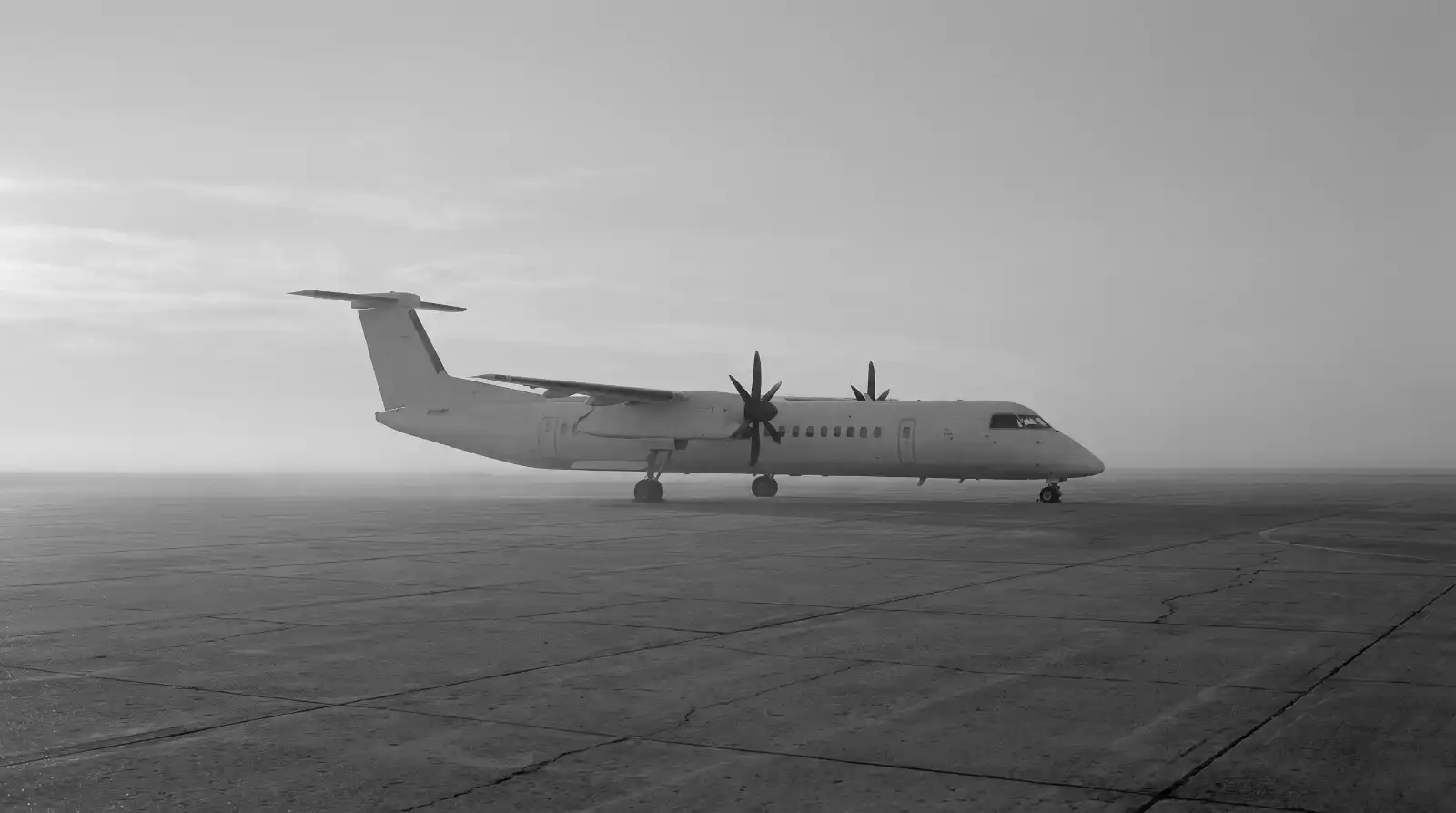
Proven, certified civil aircraft converted into high-performance autonomous and optionally-piloted platforms — for surveillance, maritime and border monitoring, logistics, civil protection and special-mission operations.
The concept
HPAA starts from an aircraft that already exists, already flies and is already certified — and adds autonomy to it. Rather than designing a new unmanned airframe from a clean sheet, a proven turboprop, business jet or transport aircraft is converted into an autonomous or optionally-piloted platform, configured to the operator's mission.
Existing in-service aircraft — turboprops, business jets and cargo types — converted to operate with configurable levels of automation, from assisted through to fully autonomous.
The aircraft remains on civil registration through conversion. It can be ferried with pilots on board, without requiring special flight permits to reposition.
Conversion is performed at the operator's own facility. The provider states a typical turnaround of approximately two months per aircraft, subject to configuration.
Once converted, the aircraft remains outwardly indistinguishable from its civil counterpart — capability without a visible signature.
The case for conversion
Purpose-built unmanned systems begin with a clean-sheet airframe. That means new design risk, a new certification pathway, long delivery timelines, and a platform whose performance envelope is fixed by what the programme could afford to design.
Conversion inverts the problem. The airframe is proven, its performance is known, its maintenance ecosystem and spares chain already exist worldwide, and its reliability is a matter of service record rather than projection. What is added is autonomy and mission capability.
Comparative performance characteristics below are those of the base civil aircraft. Conversion claims are provider-stated and subject to independent technical validation.
What conversion delivers
Because the airframe is unchanged structurally, the converted platform carries forward the characteristics that made it worth converting.
Operational radius and time on station are those of a certified transport-category or utility aircraft, not a light unmanned system.
Useful load measured in hundreds or thousands of kilograms, allowing multiple sensors, or sensors plus cargo, on a single sortie.
Transit times and operating altitudes of the base aircraft — relevant where response time or standoff altitude matters.
Airframe and powerplant with an established service record, rather than a new design with projected reliability figures.
Existing parts, tooling, maintenance organisations and type-rated engineers — no single-supplier dependency for spares.
From a single demonstrator to an operational fleet, with regional conversion, training and maintenance capability introduced as the programme matures.
Platform catalogue
Candidate platforms span light utility aircraft to heavy transport. The figures below are published characteristics of the base civil aircraft and indicate the envelope a converted platform inherits.
| Class | Representative type | Cruise | Range | Ceiling | Typical application |
|---|---|---|---|---|---|
| Light turboprop | Cessna 208 Caravan | 185 kt | 912 NM | 25,000 ft | Short-field logistics, survey, aerial delivery |
| Single turboprop | Pilatus PC-12 | 290 kt | 1,803 NM | 30,000 ft | Utility, medical evacuation, special mission |
| Twin turboprop | Beechcraft King Air 350 | 310 kt | 1,750 NM | 35,000 ft | Persistent ISR, survey, observation |
| Light business jet | Cessna Citation 525B | 417 kt | 1,875 NM | 45,000 ft | High-speed response, calibration, special mission |
| Regional turboprop | ATR 72 class | — | — | — | Regional freight, higher-volume payload |
| Heavy transport | Lockheed C-130 / C-130J | 339 kt | 2,835 NM | 28,000 ft | Outsize cargo, humanitarian resupply, civil protection |
Figures are published characteristics of the base civil aircraft and are indicative only; converted performance varies with configuration, payload and mission fit. The provider's catalogue extends to more than twenty airframe types. Specific availability, condition and pricing are confirmed on enquiry. Types listed do not represent held inventory.
The conversion
Conversion sequence
Conversion takes place at the operator's own facility rather than requiring the aircraft to be ferried to a foreign works. The provider states a typical turnaround of approximately two months per aircraft.
Mission profile, payload, range, endurance, basing and regulatory context established and agreed in writing.
Airframe drawn from the open market, from an existing operator fleet, or supplied by the operator from its own inventory.
Autonomy, navigation, mission systems and payload integration carried out at the operator's facility.
Test programme, crew and operator training, handover, and continuing engineering support.
Autonomy & mission systems
Autonomy is layered onto a proven airframe; mission systems and payloads are integrated to the operator's specification rather than supplied as a fixed package.
Persistence
Most surveillance requirements are not limited by sensor quality. They are limited by how long an aircraft can stay where the sensor is needed, how much it can carry while it does so, and how quickly it can get there.
A converted transport-category aircraft addresses all three at once — which is why the conversion route tends to produce a more useful platform than a light unmanned system of equivalent cost.
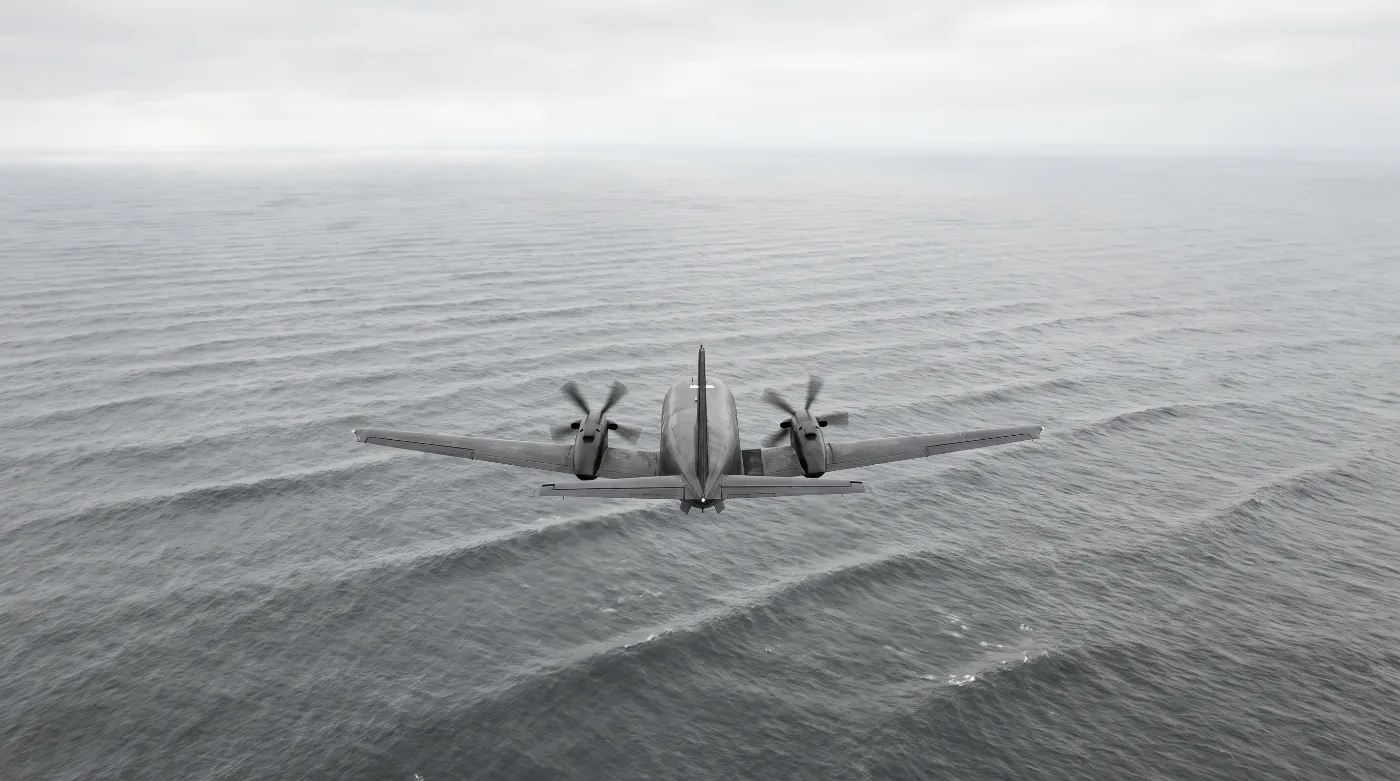
Mission applications
Mission systems are modular. The same converted airframe can be re-roled between tasks rather than being procured separately for each.
Persistent wide-area observation using EO/IR, SAR and SIGINT payloads.
Long-endurance patrol of territorial waters, EEZ, shipping lanes and offshore infrastructure.
Persistent coverage of land frontiers and remote approaches, day and night.
Logistics, resupply and precision payload drop into constrained or uncontrolled sites.
Search, damage assessment, monitoring and emergency resupply where infrastructure is degraded.
Detection, tracking and defeat of hostile unmanned systems.
Mission-defined defensive payloads, configured to the operator's requirement and applicable authorisation.
Standoff carriage of mission-defined effects and communications relay, extending reach from a crewed force.
Mission configurations involving defensive payloads or effects are subject to German export licensing and applicable end-use controls, and are discussed only with authorised government and institutional counterparties. See Assurance.
Regional relevance
The requirements that converted platforms serve well are the requirements the region already has: long coastlines and exclusive economic zones to monitor, offshore energy infrastructure to observe, remote land borders, and a growing expectation of rapid humanitarian and disaster response capability.
Extended coastline, dense shipping traffic and offshore assets require time on station rather than short-duration sorties.
Conversion of aircraft already in the region shortens the path from decision to operational capability, without waiting on a new-build production slot.
Because the base aircraft are common types, maintenance, spares and training can be established locally rather than exported.
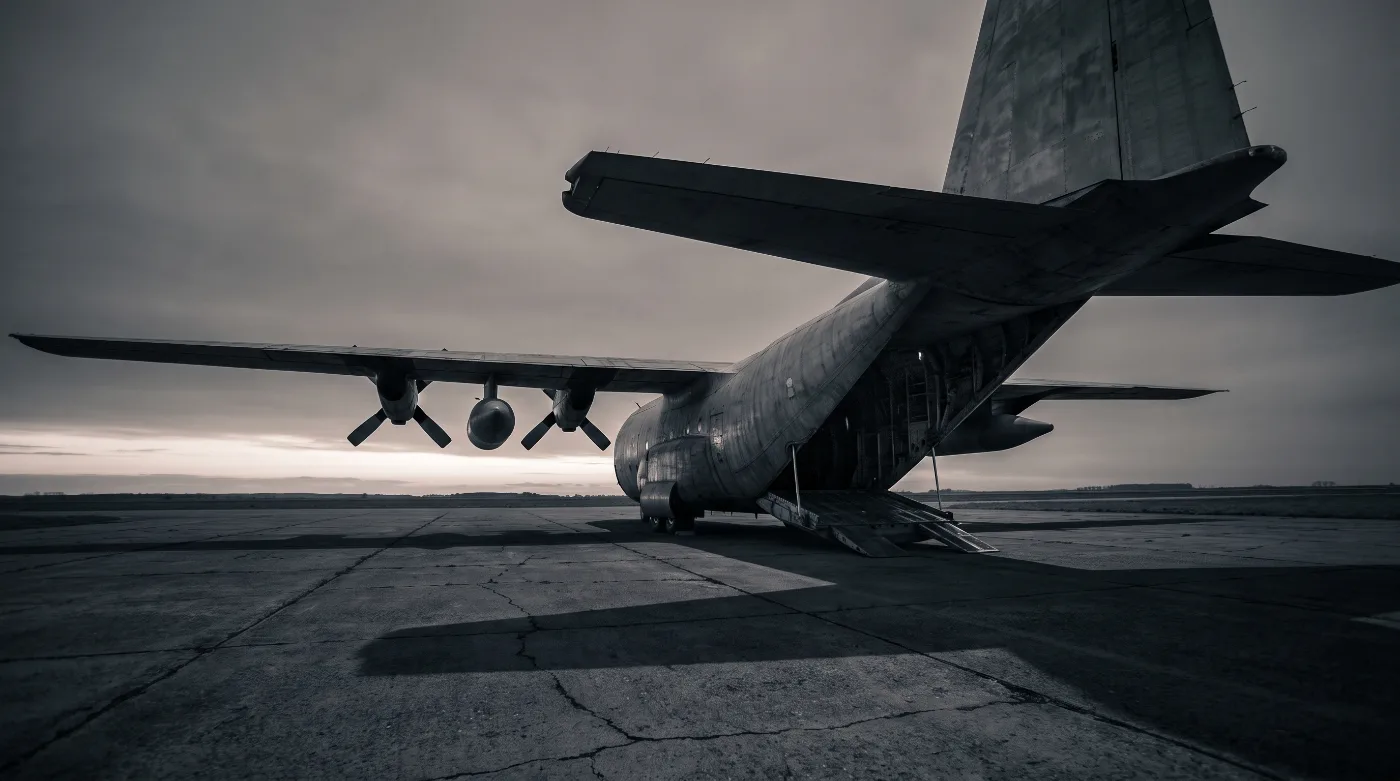
Logistics & resupply
Autonomous operation is most valuable on the sorties that are routine, long, or genuinely hazardous — sustained resupply into a degraded environment, repeated patrol of the same track, or delivery into a site where putting a crew at risk is difficult to justify.
Because the platform remains optionally piloted, the same aircraft can fly crewed when that is the sensible choice and uncrewed when it is not.
SkyHarvest's role
SkyHarvest is the regional representative of a German aerospace engineering group specialising in autonomous aircraft conversion. Our role is to bring the technology, the airframes and the operator together — and then to stand behind the sustainment layer that keeps a converted fleet flying.
A German aerospace engineering group holding the conversion technology, the engineering authority and the delivery capability.
Regional representation, aircraft sourcing, programme coordination, demonstration logistics and the sustainment layer around a converted fleet.
Government, semi-government or institutional operator — holding a direct relationship with the principal for the programme itself.
Identify technology and airframes, coordinate introductions, structure partnerships, support feasibility work, arrange demonstrations and technical sessions, and coordinate regional deployment and sustainment models.
SkyHarvest does not position itself inside a sovereign programme. Where a state prefers a direct relationship with the principal, we hand that relationship over and support it from the sustainment side.
In each territory we work alongside a locally established institution with standing in government and industry, which acts as the counterpart on the ground.
Sourcing & sustainment
A conversion programme is only as good as the aircraft feeding it and the support keeping it flying. SkyHarvest is licensed and established for exactly this work, independent of any single conversion programme.
Airframes identified against a defined requirement — open market, lessor portfolios, storage facilities and operator fleets — with records, condition and status reviewed on each.
Managed disassembly of retired and end-of-life airframes, with engine, APU and rotable recovery, traceability and documentation, and onward placement of serviceable units.
Spares provisioning and maintenance coordination around an operating fleet, drawing on the existing worldwide support base for common civil types.
Coordination of crew and engineering training, ferry and import, technical acceptance, and the logistics of standing a capability up in-country.
Assurance & compliance
This is a category of capability where an institutional buyer is entitled to verify every claim before committing anything. We would rather set that out plainly than be asked for it.
The conversion technology is of German origin. Supply, conversion and mission-system integration are subject to German export licensing through the Federal Office for Economic Affairs and Export Control (BAFA) and to applicable end-use and end-user controls. Mission configurations involving defensive payloads or effects are discussed only with authorised government and institutional counterparties, and nothing on this page constitutes an offer of controlled goods or technology.
Technical characteristics, conversion timelines and capability descriptions on this page originate with the technology provider. They are presented as provider-stated and are subject to independent technical validation by the operator. Aircraft performance figures are published characteristics of the base civil types.
Engineering credentials, certification status, maintenance approvals and programme references are made available for verification under non-disclosure. Certified maintenance is provided through an EASA Part-145 approved organisation, and flight control and autonomy work is supported by a European university research partner.
Technical briefings, capability reviews and demonstration aircraft visits can be arranged in Germany under non-disclosure at short notice, so that the capability is assessed directly rather than on the basis of documentation.
Engagement path
A deliberately short sequence. The first step is a technical discussion — everything else follows from what that establishes.
Establish the operational requirement and whether the conversion route genuinely fits it.
Detailed technical briefing, engineering credentials and programme references, under non-disclosure.
Aircraft review and technical walkthrough with the engineering team at the provider's facility.
Platform selection, sourcing route, conversion scope, regulatory pathway and programme schedule.
First aircraft converted, tested and delivered, with training and sustainment established alongside it.
Coverage
SkyHarvest is established in the United Arab Emirates and holds regional representation across four territories, working through locally established partners in each.
Contact
Enquiries are answered directly. For a conversion programme, the mission profile, operating environment and timeline are the most useful things to include. Technical detail is exchanged under non-disclosure from the first substantive conversation.
info@skyharvest.ae